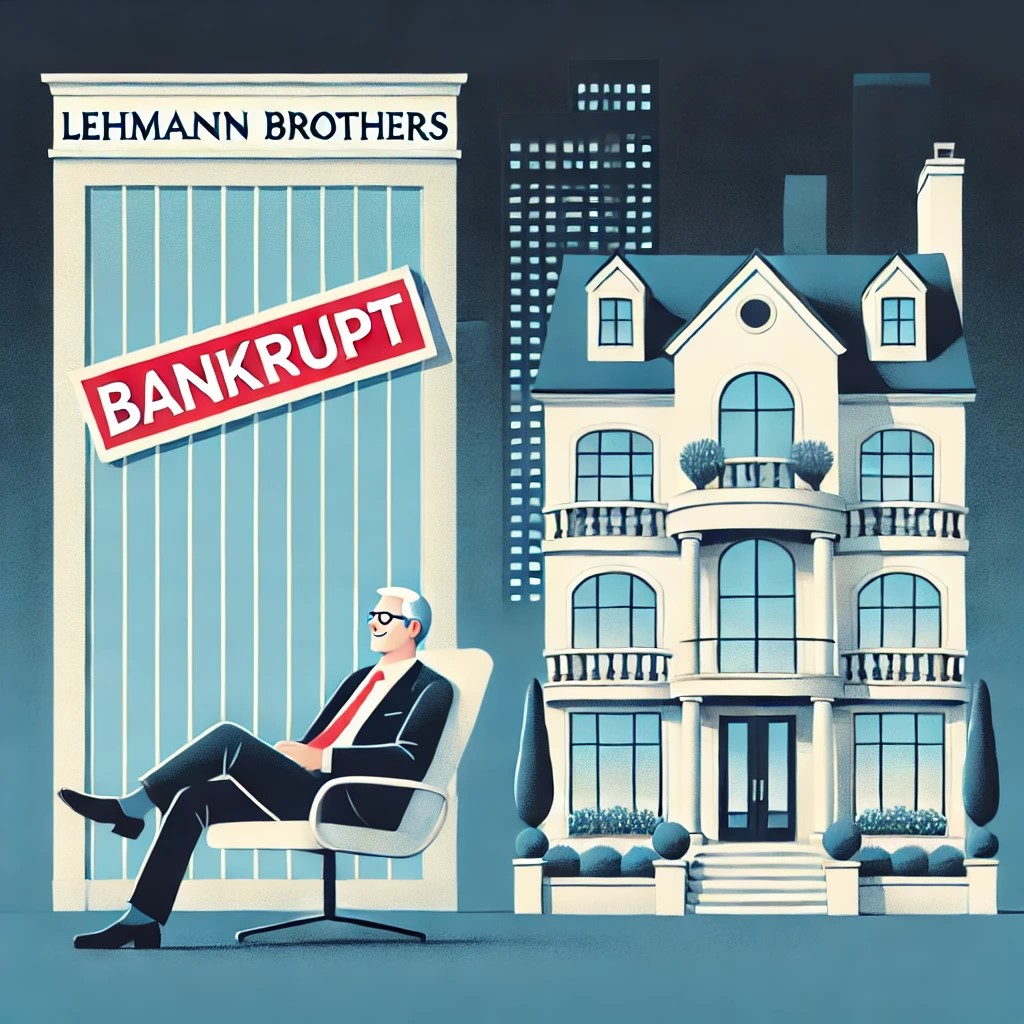
Sole Proprietorship, Partnership: Bank can seize firm’s assets and owners’ personal assets
Corporation: Bank can seize firm’s assets but not owners’ personal assets (called Limited Liability)
Intro
Business
Goals
Agency
Markets
FINE 3010 - Module 1
What distinguishes a corporation from other forms of business?
Who owns the liabilities?
Question: What happens if firm took a bank loan and cannot repay it back?
Sole Proprietorship, Partnership: Bank can seize firm’s assets and owners’ personal assets
Corporation: Bank can seize firm’s assets but not owners’ personal assets (called Limited Liability)
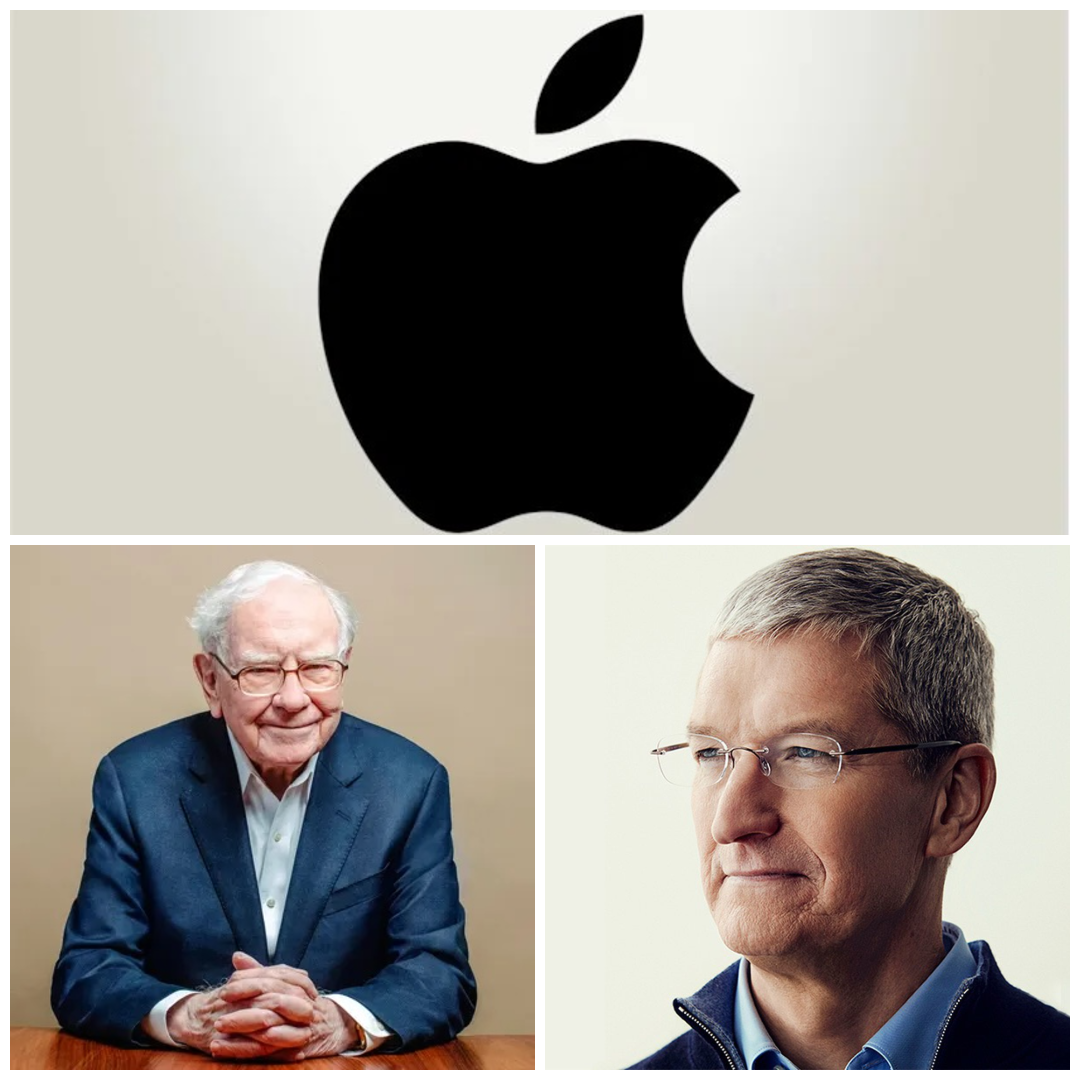
Key Idea: Corporations are legal entities separate from their owners
The liability structure determines the risks owners face
Understanding this is crucial when deciding how to set up your own business or invest in one
Limited liability was required to create large and risk-taking corporations we see today!
Intro
Business
Goals
Agency
Markets
FINE 3010 - Module 1
What distinguishes a corporation from other forms of business?
Who pays the taxes?
Intro
Business
Goals
Agency
Markets
FINE 3010 - Module 1
What distinguishes a corporation from other forms of business?
Who pays the taxes?
Sole Proprietorship, Partnership: Only owners pay tax
Intro
Business
Goals
Agency
Markets
FINE 3010 - Module 1
What distinguishes a corporation from other forms of business?
Who pays the taxes?
Sole Proprietorship, Partnership: Only owners pay tax
Key Idea: Corporations are legal entities separate from their owners
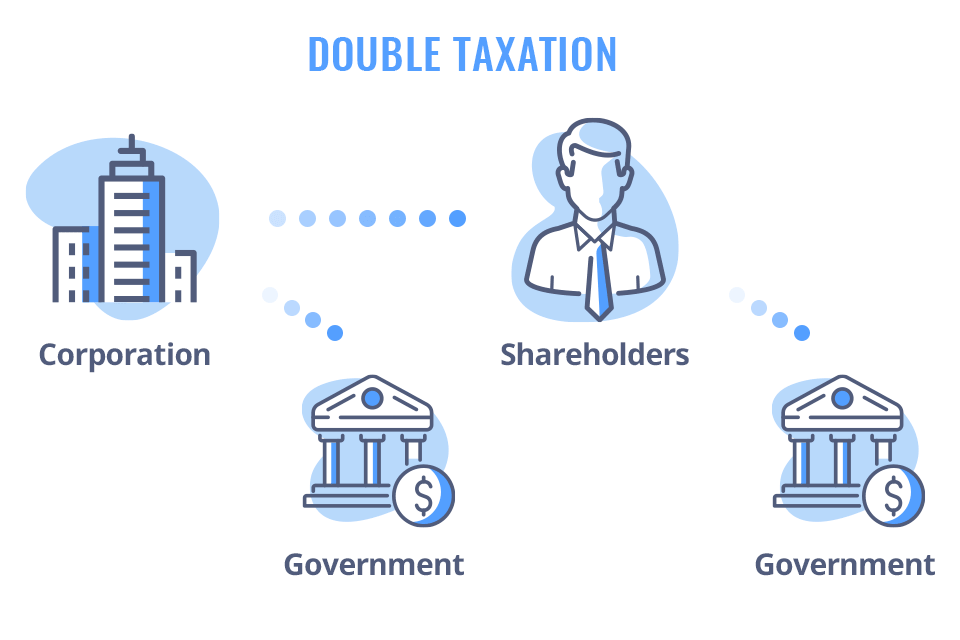
Corporation:
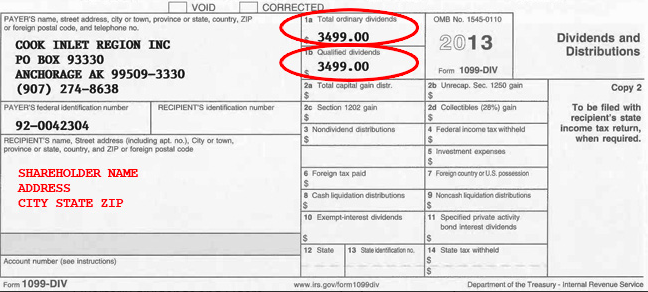
Business pays tax on its income
Owners also pay tax on the income generated by their investments:
I.e., on dividends they receive from the business and on capital gains
Capital gain: The profit an investor earns when they sell a stock for more than the price they originally paid
This is called Double Taxation
Intro
Business
Goals
Agency
Markets
FINE 3010 - Module 1
What distinguishes a corporation from other forms of business?
Intro
Business
Goals
Agency
Markets
FINE 3010 - Module 1
What distinguishes a corporation from other forms of business?
Who pays the taxes?
Sole Proprietorship, Partnership: Only owners pay tax
Key Idea: Corporations are legal entities separate from their owners
Corporation:
Business pays tax on its income
Owners also pay tax on the dividends they receive from the business and the capital gains
This is called Double Taxation
While corporations are taxed twice, they may end up paying lower effective tax rate than a small proprietorship due to tax loopholes and deductions
See more at: https://usafacts.org/articles/how-can-corporations-avoid-paying-taxes/
Intro
Business
Goals
Agency
Markets
FINE 3010 - Module 1
What distinguishes a corporation from other forms of business? - Summary
Separation of ownership and control
Who owns the liabilities?
Who pays the taxes?
Intro
Business
Goals
Agency
Markets
FINE 3010 - Module 1
Questions
When a corporation fails, the maximum that can be lost by an individual shareholder is:
the amount of their initial investment.
the amount of their share of the profits.
their proportionate share required to pay the corporation's debts.
the amount of their personal wealth
Intro
Business
Goals
Agency
Markets
FINE 3010 - Module 1
Recap
What is a business?
Organization engaged in commercial, industrial, or professional activities
Types of businesses: Sole Proprietorship, Partnership, and Corporation
Corporations are different: (i) ownership vs. control, (ii) who owns the liabilities, (iii) who pays the taxes?
What do businesses want to achieve?
Are there ethical considerations?
How do they achieve their goals?
What is financial management?
Intro
Business
Goals
Agency
Markets
FINE 3010 - Module 1
Supplementary: Other business forms
We learned about sole proprietorship, partnership, and corporation
More precisely, “general partnership” and “C-corporation”
There are also hybrids in between general partnerships and C-corporations that features both limited liability and no double-taxation
Limited partnerships (LP): Partnerships with general partners + limited partners
Limited liability partnerships (LLP) and limited liability companies (LLC): Partnerships in which all partners have limited liability
S-Corp: Must have <= 100 shareholders, all of whom must be U.S. citizens or residents
Intro
Business
Goals
Agency
Markets
FINE 3010 - Module 1
Supplementary: Taxation on multi-entity structure
How are firms taxed when a corporation (parent) owns a partnership (subsidiary)?
Partnership does not pay business income tax
Income of the partnership (subsidiary) flows to the corporation (parent)
The corporation pays business income tax on the income it receives from the partnership
How are firms taxed when a corporation (parent) owns another corporation (subsidiary)?
The subsidiary corporation pays business income tax
Income of the subsidiary corporation flows to the parent corporation
The parent corporation pays business income tax on the income it receives from the subsidiary corporation
But there are Dividends Received Deduction (DRD)!
To alleviate triple taxation
Intro
Business
Goals
Agency
Markets
FINE 3010 - Module 1
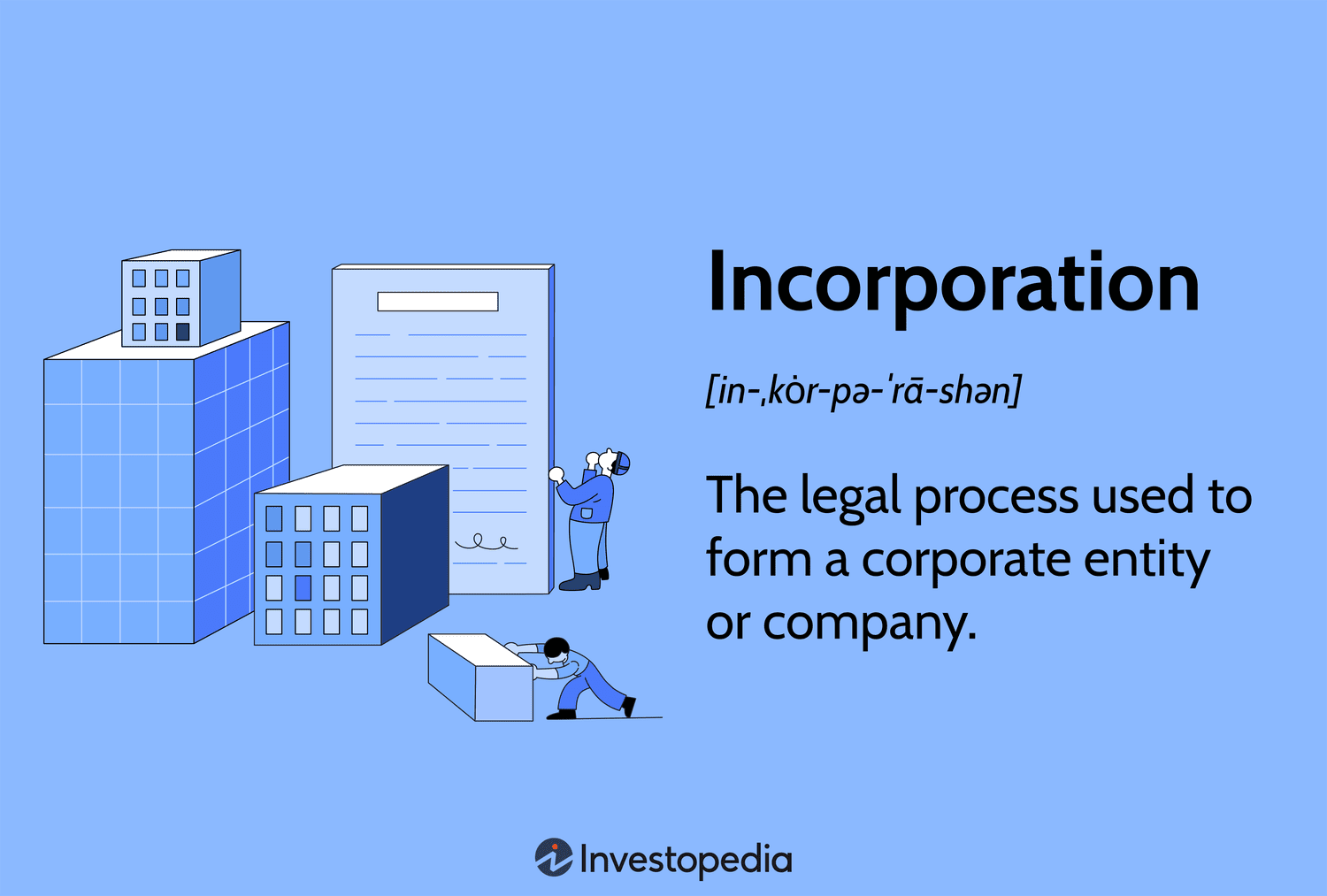
Supplementary: How to form/become a corporation?
File Articles of Incorporation with the Secretary of State
Adopt bylaws, i.e., internal rules for governance
Appoint directors & officers to manage the company
Issue stock to shareholders
Result: A separate legal entity with limited liability
Intro
Business
Goals
Agency
Markets
FINE 3010 - Module 1
Supplementary: How to form/become a corporation?
Corporations which act in more than one state are subject only to the laws of their state of incorporation with regard to the regulation of the internal affairs of the corporation
Most large U.S. firms incorporate in Delaware due to:
Business-friendly laws
E.g., single-person corporation is allowed
A specialized business court and a more well-developed body of case law than other states => Predictable outcomes of legal disputes
Intro
Business
Goals
Agency
Markets
FINE 3010 - Module 1
Supplementary: Miscellaneous
As a U.S. citizen, U.S. taxes your worldwide income no matter where you live. However,
there is Foreign Earned Income Exclusion (up to ~$120k)
there is Foreign Tax Credit
Intro
Business
Goals
Agency
Markets
FINE 3010 - Module 1
What goals should businesses achieve?
Increase customer satisfaction?
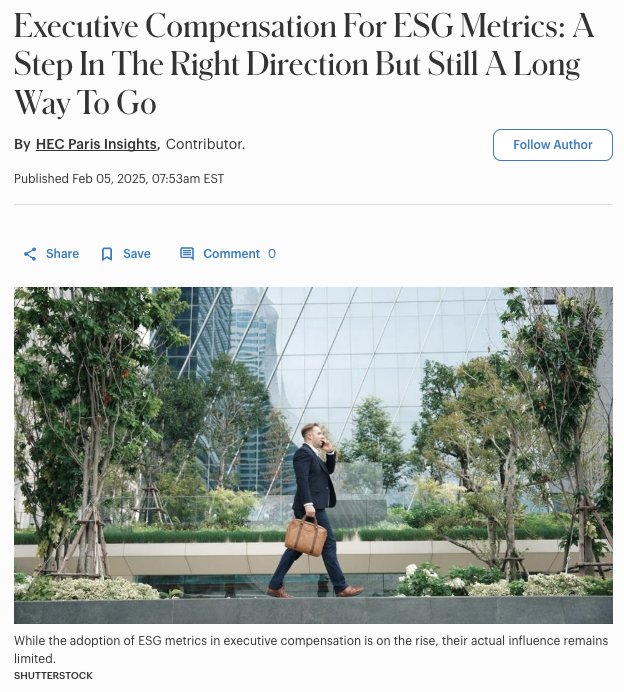
Have good ESG reputation?
E: Environmental. S: Social. G: Governance.
Maximize stakeholder benefits?
Diversify revenue streams?
Expand to more countries/Reach more customers?
Stay ahead of competitors?
Maximize efficiency/Minimize expenses?
Maximize cash flow?
Traditionally, shareholders want to maximize the market value of their shares (equivalently, of the firm)
This is not the same as maximizing cash flow
Intro
Business
Goals
Agency
Markets
FINE 3010 - Module 1
Shareholder Theory
Key Idea of Modern Corporate Finance Theory:
Primary goal of a corporation is “shareholder value maximization”
Laws and regulations can protect the interests of other stakeholders
This is called “Shareholder Theory”
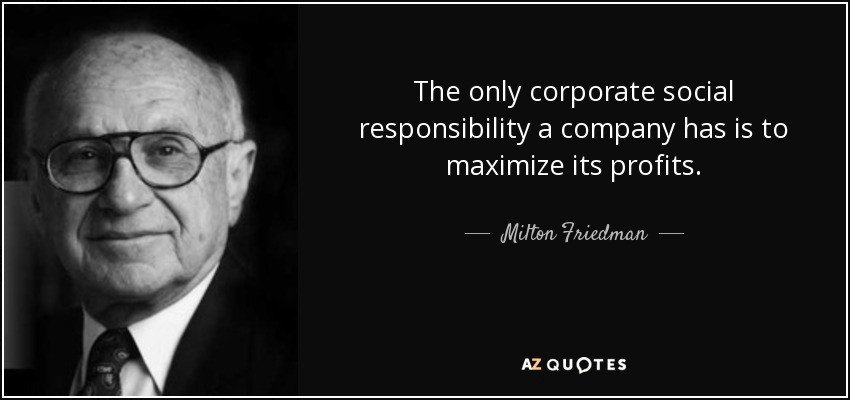
“The only social responsibility of business is to increase its profits” – Milton Friedman (1970)
Intro
Business
Goals
Agency
Markets
FINE 3010 - Module 1
Critics of Shareholder Theory
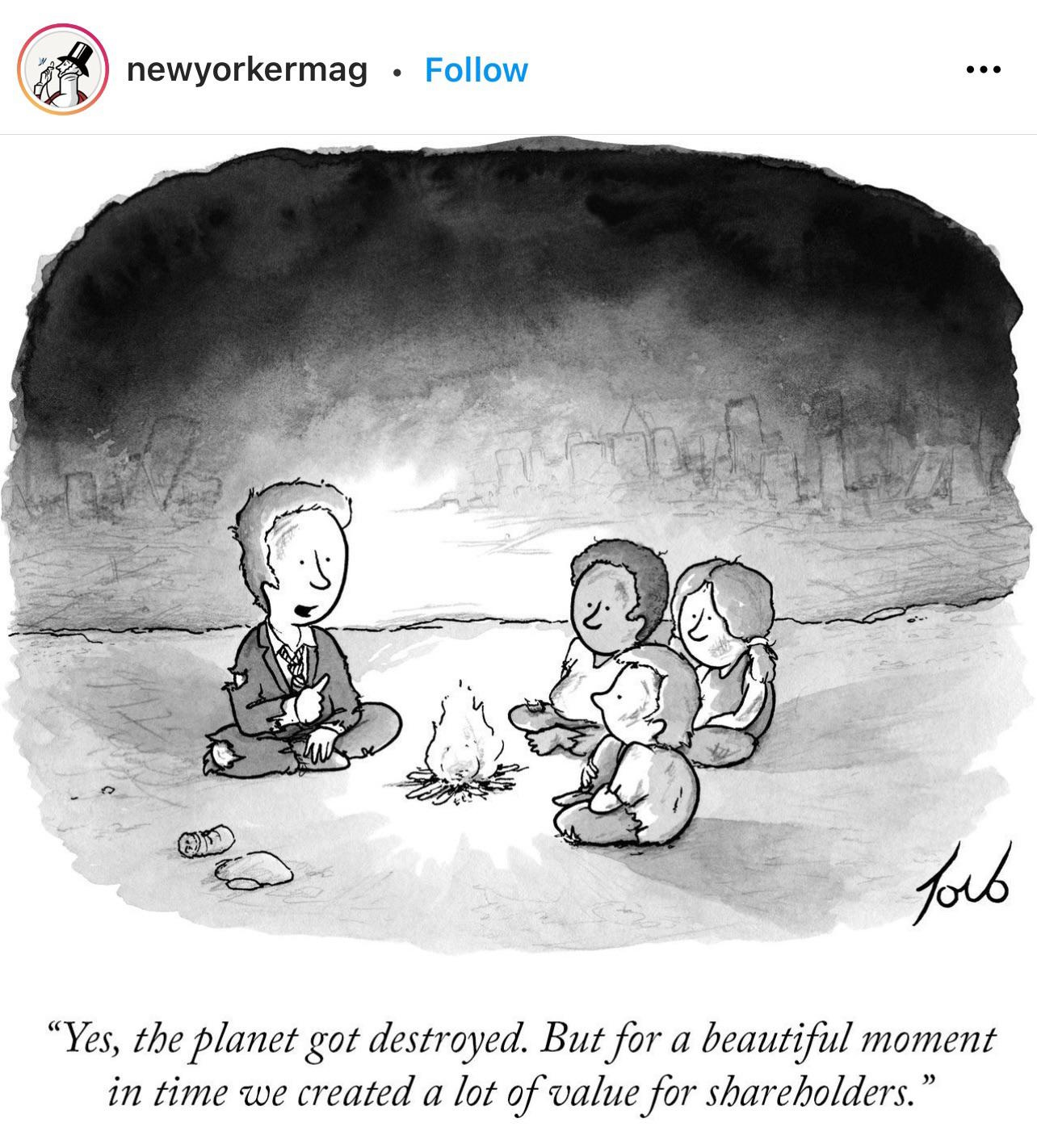
Is shareholder value maximization ethical?
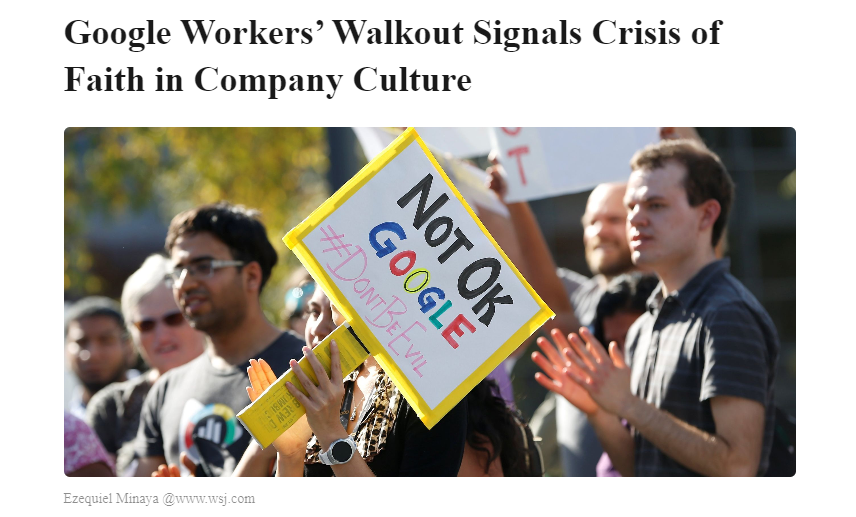
Are there cases where laws and regulations fail to protect the interests of other stakeholders?
Critics – Shareholder theory has harmed society:
Higher income inequality
Higher carbon emissions
Negative externalities on developing countries
Intro
Business
Goals
Agency
Markets
FINE 3010 - Module 1
Critics of Shareholder Theory
Is shareholder value maximization ethical?
Are there cases where laws and regulations fail to protect the interests of other stakeholders?
Critics – Shareholder theory has harmed society:
Higher income inequality
Higher carbon emissions
Negative externalities on developing countries
Sometimes, there is no conflict
Benefitting stakeholders (consumers, employees, etc.) creates a good reputation
Reputation increases shareholder value in the long run
Intro
Business
Goals
Agency
Markets
FINE 3010 - Module 1
Ethical considerations
Sometimes, violations of ethics are obvious
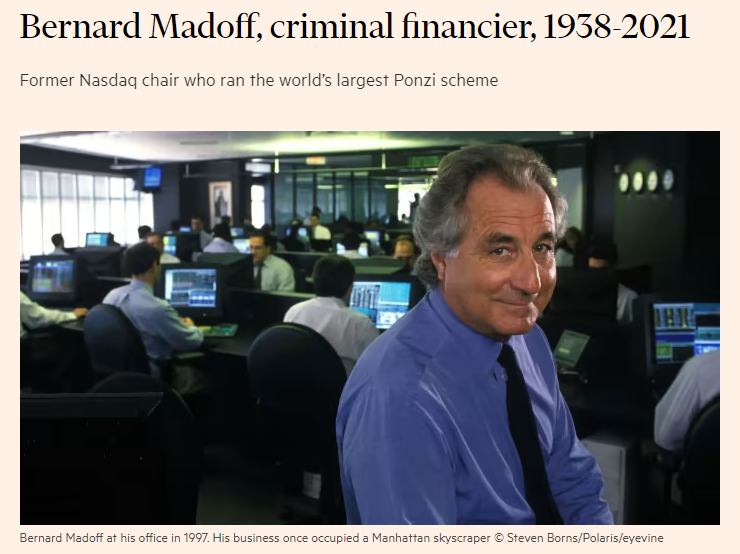
Clear examples: Bernard Madoff
Convinced investors to give him $20 billion in return for consistently high returns
Claimed returns were all fictitious!
Paid early investors with later investors’ money to give an illusion of high returns!
“Ponzi Scheme”
Outcome: Over 20,000 investors lost more than $10 billion. Madoff was sentenced to 150 years in prison.
Source: Financial Times, dated Apr 16, 2021
Intro
Business
Goals
Agency
Markets
FINE 3010 - Module 1
Sometimes, violations of ethics are obvious
Clear examples: Bernard Madoff
Convinced investors to give him $20 billion in return for consistently high returns
Claimed returns were all fictitious!
Paid early investors with later investors’ money to give an illusion of high returns!
“Ponzi Scheme”
Outcome: Over 20,000 investors lost more than $10 billion. Madoff was sentenced to 150 years in prison.
Unclear territory: Private equity
Private equity firms often acquire businesses to transform them
They layoff a lot of people who lose their jobs
We should be mindful of these ethical considerations
Source: Financial Times, dated Oct 6, 2019
Ethical considerations
Intro
Business
Goals
Agency
Markets
FINE 3010 - Module 1
What do businesses want to achieve?
In cases like Bernard Madoff's Ponzi scheme, who is most to blame for the losses?
The perpetrator (Madoff himself).
The investors, for not doing enough due diligence.
Regulators, for failing to catch the fraud earlier.
A combination of all the above.
Follow-Up: How to prevent such major ethical violations?
Intro
Business
Goals
Agency
Markets
FINE 3010 - Module 1
What do businesses want to achieve?
When private equity firms acquire a company and lay off workers to make it more profitable, do you agree with this practice?
Yes, it’s necessary to improve efficiency and maximize shareholder value.
No, it prioritizes profits over people.
It depends on how the layoffs are managed and whether the business becomes sustainable in the long term.
I'm unsure or have mixed feelings.
Follow-Up: Should the government regulate private equity to minimize these layoffs? Why or why not?
Intro
Business
Goals
Agency
Markets
FINE 3010 - Module 1
What is financial management?
The next question is: How do businesses achieve the goal of shareholder value maximization?
Whether a business is small, like a local coffee shop, or large, like Tesla, achieving its goals requires sound financial management – making good decisions involving money
Businesses make many such decisions
Should I hire more workers?
Should I launch new products?
Should I use cash or sell shares or take a loan for the new machine?
…
Intro
Business
Goals
Agency
Markets
FINE 3010 - Module 1
What is financial management?
Financial management is two things:
Intro
Business
Goals
Agency
Markets
FINE 3010 - Module 1
Investment Decision
Decision to buy or sell real assets
Intro
Business
Goals
Agency
Markets
FINE 3010 - Module 1
Investment Decision
Decision to buy or sell real assets
What are real assets?
Costly assets that pay real returns in future
Tangible Assets
Physical assets that you can touch
E.g., Equipment, factory, land, etc.
Intro
Business
Goals
Agency
Markets
FINE 3010 - Module 1
Investment Decision
Decision to buy or sell real assets
What are real assets?
Costly assets that pay real returns in future
Tangible Assets
Physical assets that you can touch
E.g., Equipment, factory, land, etc.
Intangible Assets
Assets that are not physical (but still valuable!)
E.g., Expertise, brand recognition, patents, etc.
E.g., ChatGPT’s algorithm and database
Intro
Business
Goals
Agency
Markets
FINE 3010 - Module 1
Financing Decision
Decision on how to raise money from investors and repay them
Suppose the business wants to buy a real asset:
Use own money:
Cash savings, retained earnings
Raise money from others:
Sell shares or borrow (bank/investors)
Intro
Business
Goals
Agency
Markets
FINE 3010 - Module 1
Financing Decision
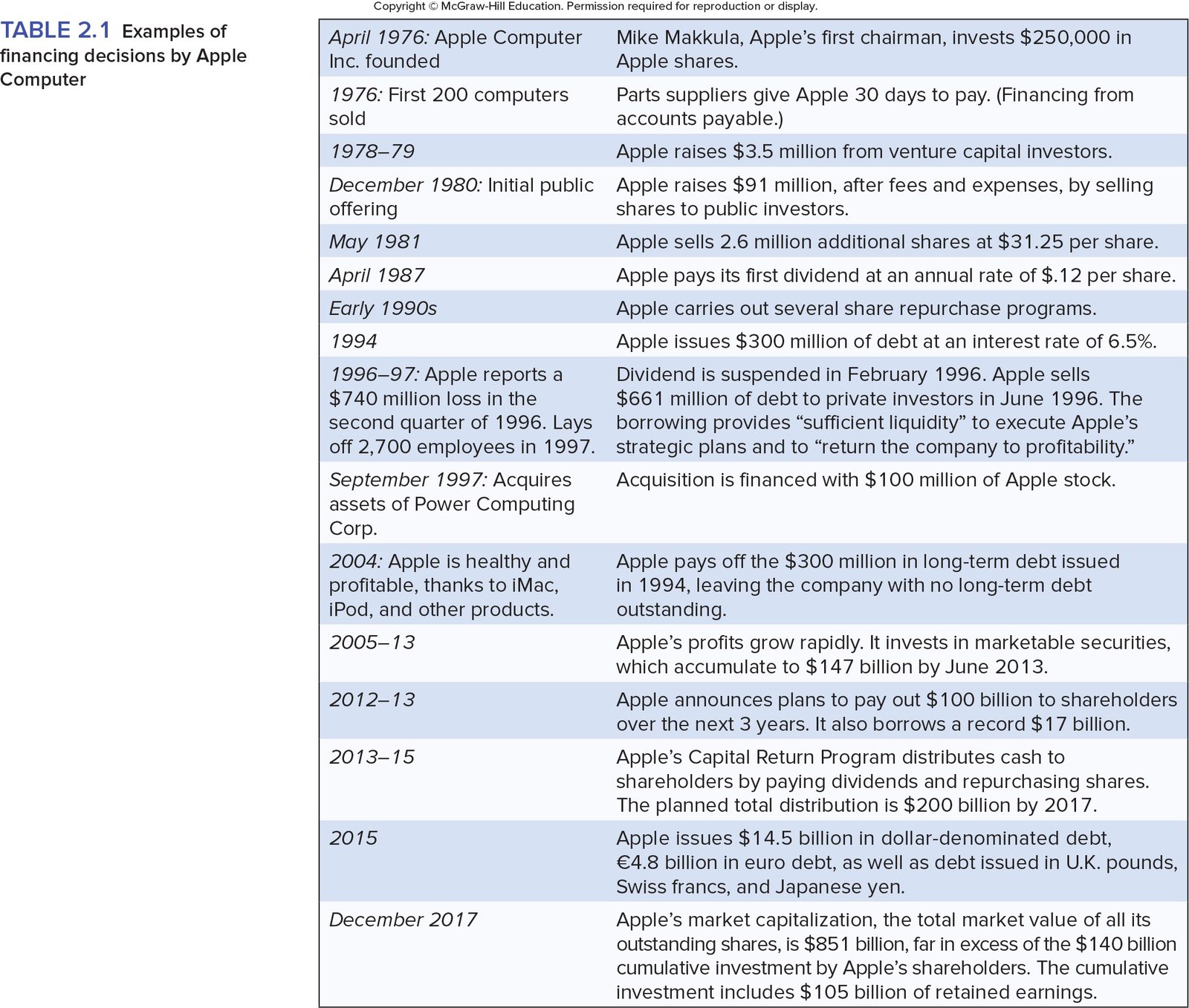
A financial asset is a non-physical asset that gets its value from a contractual right or ownership claim. E.g.,
A stock is a claim on the firm’s real assets and on the income that those assets will produce
A bank loan gives the bank the contractual right to get its money back plus interest
A business finances its investment in real assets by issuing financial assets to investors
“Finance” means gathering money
Business
Investors
Money
Financial Assets
Intro
Business
Goals
Agency
Markets
FINE 3010 - Module 1
Example
In 2017, Delta decided to expand its fleet
It orders 100 Airbus 321 airliners
This is an example of Investment Decision
Or “Capital budgeting decision”
Or “Capital expenditure (CAPEX) decision”
(these terms are synonyms!)
Doing this requires money, so Delta must decide how to pay for this investment
It issued (sold) $1 billion 5-year bonds
Investors gave money to Delta
Received a paper promising that the money will be returned with interest
This is an example of Financing Decision
Intro
Business
Goals
Agency
Markets
FINE 3010 - Module 1
How do maximize shareholder value?
Key: Financial Management!
Make good investment and financing decisions
Investment Decision
Choose investments whose returns are higher than any other alternative use of cash
Financing Decision
Choose the cheapest source of funding
Intro
Business
Goals
Agency
Markets
FINE 3010 - Module 1
What we covered so far…
What is a business?
Organization engaged in commercial, industrial, or professional activities
Types of businesses: Sole Proprietorship, Partnership, and Corporation
Corporations are different: (i) ownership vs. control, (ii) who owns the liabilities, (iii) who pays the taxes?
What do businesses want to achieve?
Maximize shareholder value
Are there ethical considerations?
Yes
How do they achieve their goals?
What is financial management?
Investment Decision -- Picking projects that return more than the best alternative
Financing Decision -- Choose the cheapest source of funding
Intro
Business
Goals
Agency
Markets
FINE 3010 - Module 1
Challenge in maximizing shareholder value
Remember: Investment/Financing decisions in a corporation are made by managers (not owners)
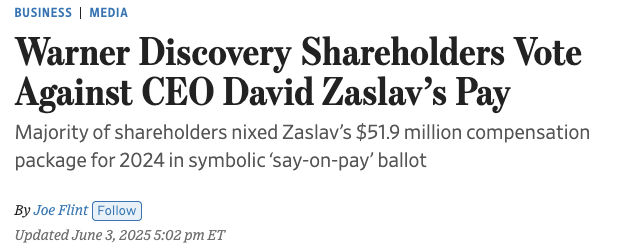
Agency Problems: Managers want something other than maximizing shareholder value
Intro
Business
Goals
Agency
Markets
FINE 3010 - Module 1
Challenge in maximizing shareholder value
Remember: Investment/Financing decisions in a corporation are made by managers (not owners)
Agency Problems: Managers want something other than maximizing shareholder value
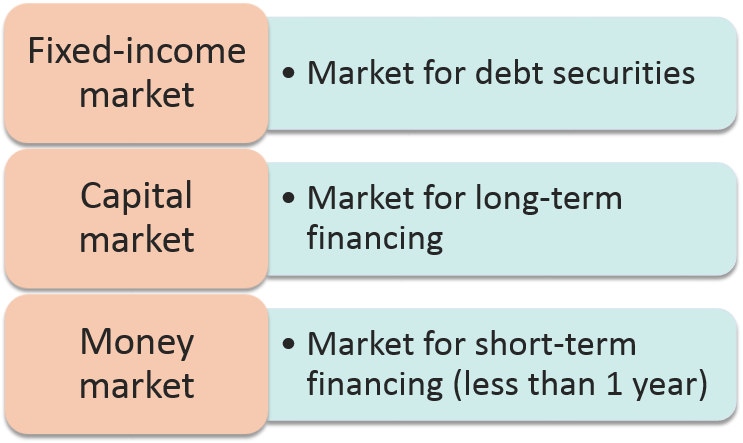
E.g., commercial papers (a kind of corporate debt instrument with maturity <= 270 days)
E.g., stock and long-term (>= one year) debt
These three can be either primary or secondary markets.
Intro
Business
Goals
Agency
Markets
FINE 3010 - Module 1
Financial intermediaries
Financial Intermediary: An organization that raises money from investors and provides financing for individuals, corporations, or other organizations.
(Commercial) banks
Investment banks
Insurance companies
Mutual funds, pension funds, hedge funds
Intro
Business
Goals
Agency
Markets
FINE 3010 - Module 1
Financial intermediaries
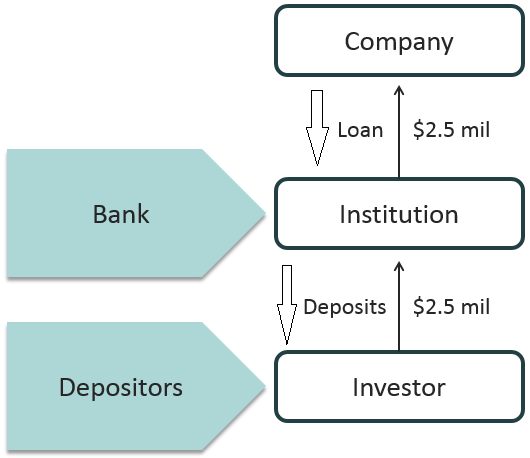
(Commercial) banks are one of the most important intermediaries in financial market
They take deposits and make loans
They help companies (borrowers) meet depositors (i.e., you!)
Intro
Business
Goals
Agency
Markets
FINE 3010 - Module 1
Financial intermediaries
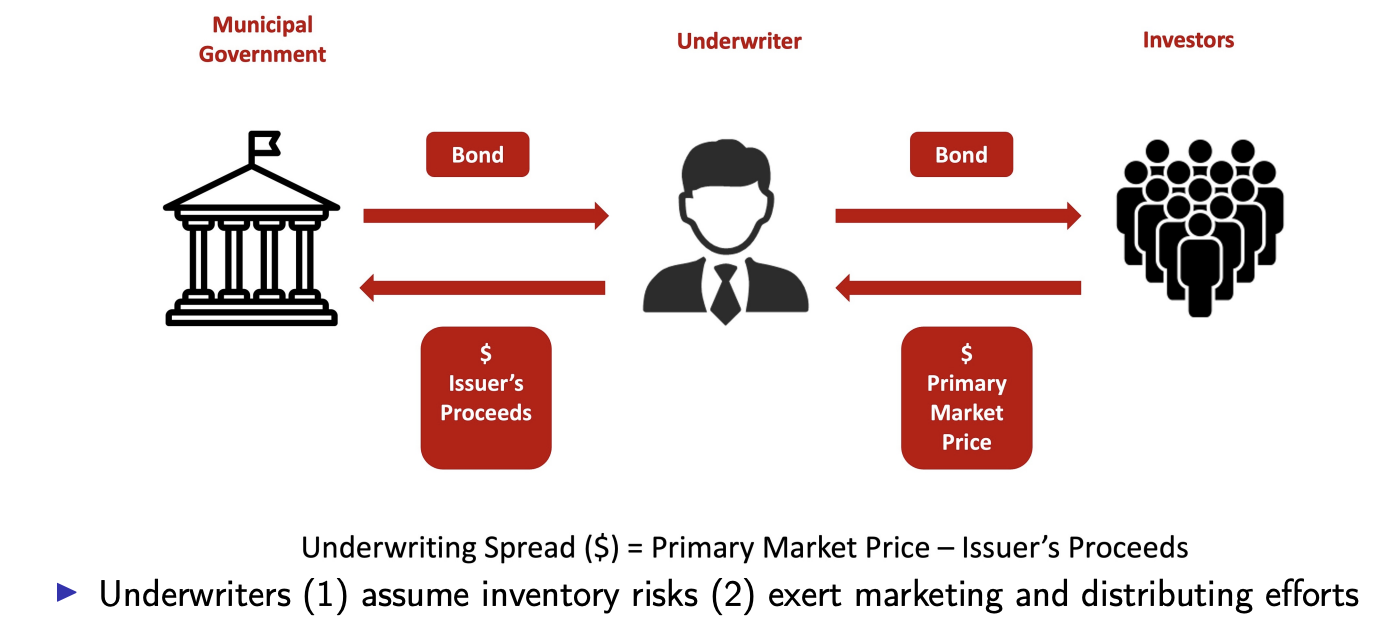
Investment banks advise and assist firms in obtaining finance. They:
Serve as underwriters in the process of security issuance (e.g., IPOs, bond issuance)
Intro
Business
Goals
Agency
Markets
FINE 3010 - Module 1
Financial intermediaries
Investment banks advise and assist firms in obtaining finance. They:
Serve as underwriters in the process of security issuance (e.g., IPOs, bond issuance)
(Supplementary) From my dissertation:
Investment banks are crucial because of their expertise and connections
Intro
Business
Goals
Agency
Markets
FINE 3010 - Module 1
Financial intermediaries
Investment banks advise and assist firms in obtaining finance. They:
Serve as underwriters in the process of security issuance (e.g., IPOs, bond issuance)
Advise on mergers and acquisitions
Sometimes invest their own money in start-ups and other ventures
Intro
Business
Goals
Agency
Markets
FINE 3010 - Module 1
Financial intermediaries
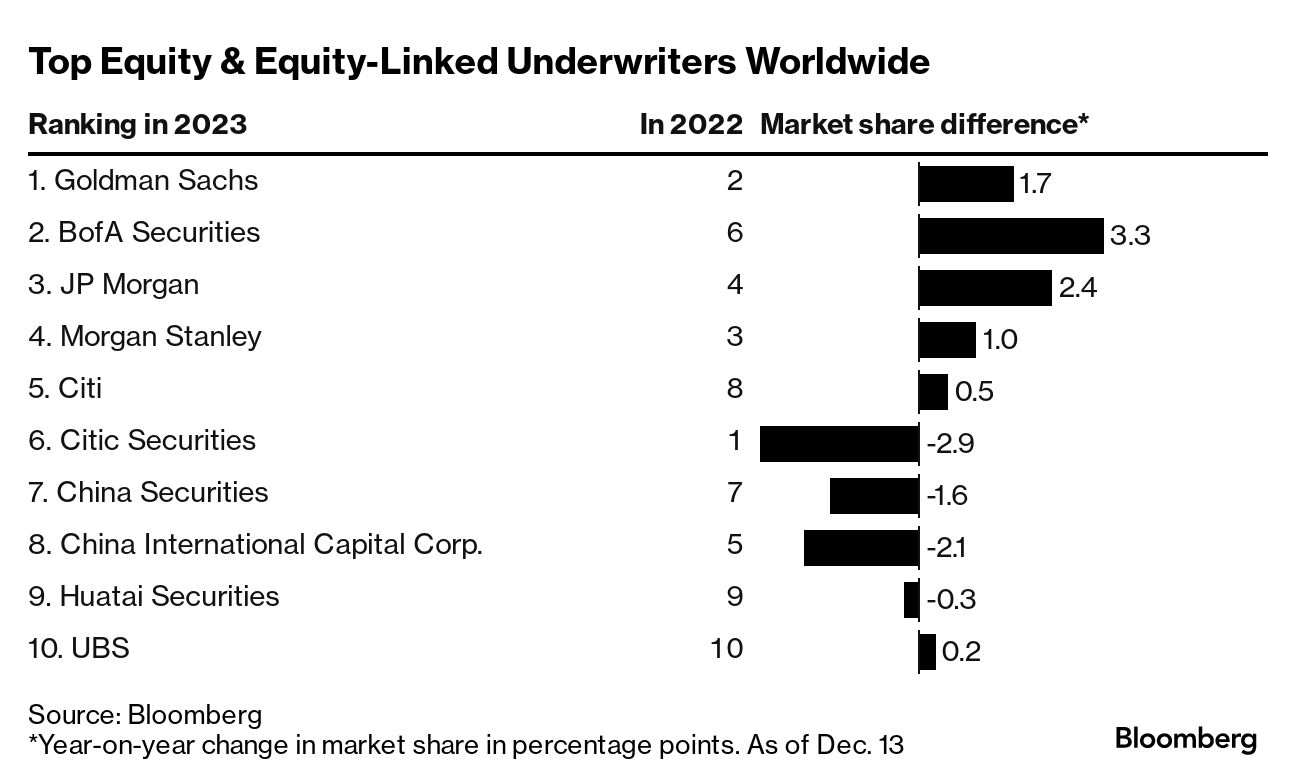
Global IPO “league table”:
Intro
Business
Goals
Agency
Markets
FINE 3010 - Module 1
Financial intermediaries
Mutual Fund: Investment company that pools the savings of many investors and invests in a portfolio of securities.
Hedge Fund: Private investment pool open to wealthy individuals or institutional investors. Only lightly regulated and therefore can pursue more speculative policies than mutual funds.
Pension Fund: A fund set up by an employer to provide for employee's retirement.
Intro
Business
Goals
Agency
Markets
FINE 3010 - Module 1
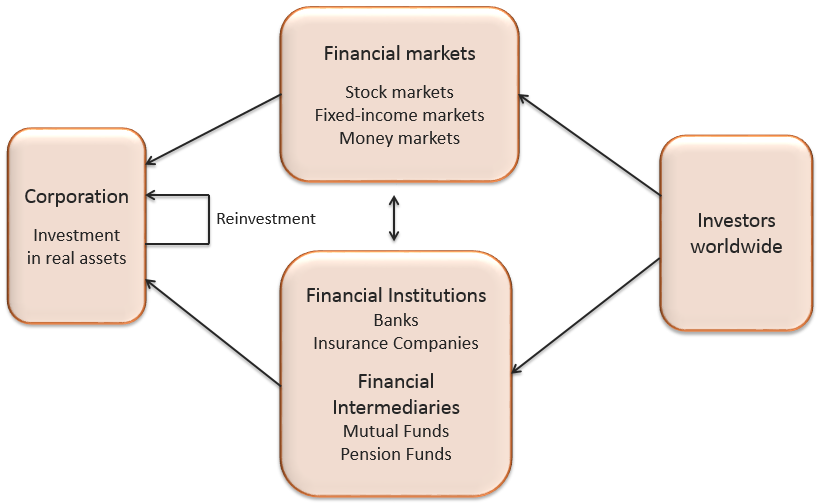
Financial markets and intermediaries
Intro
Business
Goals
Agency
Markets
FINE 3010 - Module 1
Intro
Business
Goals
Agency
Markets
FINE 3010 - Module 1
Questions
A company can pay for its expansion in all the following ways except:
by using the earnings generated from its sale of obsolete equipment.
by persuading a director’s sister-in-law to make a personal loan to the company.
by purchasing bonds in the secondary market.
by plowing back part of its profits.
Intro
Business
Goals
Agency
Markets
FINE 3010 - Module 1
Financial Crisis of 2007-2009
Link: https://www.youtube.com/watch?v=eD9ry2Lgglw
Notice the role of mortgage lenders, investment banks, and insurance companies. Both are important financial intermediaries!
How did investment banks and insurance companies amplify the boom and exacerbate the crisis?